Complaints Procedure — House Clearance Thames Ditton
 Purpose and scope: This complaints procedure explains how our house clearance Thames Ditton and local rubbish removal service handles concerns about work quality, scheduling, charges, waste handling and customer treatment. It is intended for residents and property managers who use a clearance company in the Thames Ditton area but is written as a general, legally neutral complaints process rather than a local terms page. The aim is to resolve problems quickly, fairly and in a way that respects local waste regulations while protecting customer rights and company standards.
How to raise a concern
If you believe the service you received did not meet the agreed standard, please submit a clear description of the issue. Include details such as the booking date, the type of service (for example full house clearance, single-room clear-out or garden waste removal), and a concise statement of what went wrong. Keep copies of invoices, photos and any communications so your concern can be reviewed efficiently. Complaints may relate to safety, missed collections, incorrect billing or unacceptable staff behaviour. Initial acknowledgment: Once a complaint is submitted it will be acknowledged promptly. An initial acknowledgment will confirm the complaint has been received and provide an expected timeframe for a full response. The aim is to acknowledge all complaints within two working days and to provide a substantive response within 10 working days where possible; if a more detailed investigation is needed, we will explain the steps and provide updates.
Investigation process
After acknowledgment a designated complaints handler will review the case. That review will include checking job records, staff notes, waste transfer documentation and any photographic evidence. If necessary, the handler may contact third parties such as disposal sites or subcontractors to verify actions taken. The investigation is impartial and aims to identify the root cause and determine any corrective actions.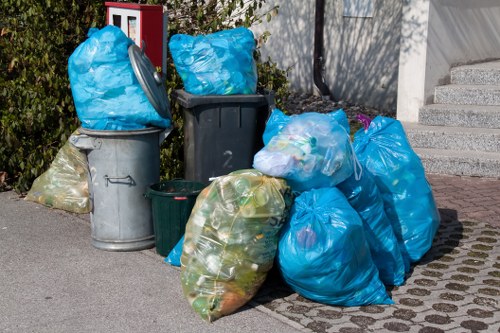 Resolution options: Where the complaint is upheld, possible remedies may include an apology, a partial or full refund, an offer to re-perform the service (for example returning to remove missed items or to rectify damage), or an agreed reduction in future charges. Remedies will be proportionate to the issue identified and may include non-monetary remedies such as improved scheduling or revised handling practices. Remedies are intended to be practical and to restore confidence in the clearance service.
Escalation: If the initial response is not satisfactory to the complainant, the matter can be escalated within the company. The escalation route will be explained in the response letter and will generally involve review by a senior manager who was not involved in the original decision. Internal escalation seeks an independent reassessment and a final internal determination, normally within 15 working days of escalation.
Record keeping and confidentiality: All complaints and outcomes are recorded for at least the period required by law and for continuous improvement purposes. Records include the complaint details, investigation notes, communications, and the final outcome. Confidentiality is respected: personal data is handled in accordance with applicable privacy practices and only shared with third parties where necessary to investigate or remedy the complaint, such as waste transfer stations or authorised subcontractors.
 Independent review and external bodies: If, after exhausting the company’s internal process, the complainant remains dissatisfied, they may seek independent advice. The complaints procedure will explain which external bodies or ombudsmen are appropriate for different complaint types. Examples include consumer protection authorities, local environmental regulators for waste handling issues, and small claims courts for unresolved financial disputes. External escalation is optional and should be considered where internal remedies have been exhausted.
 Quality improvement and training: Complaints are used as a source of learning. Identified problems lead to improved procedures, refresher training, or changes to supplier arrangements. Staff receive periodic training on customer care, safe waste handling and compliance with disposal requirements. That helps reduce repeat issues and maintains standards across house clearances, skip alternatives and general rubbish clearance operations.
What you can expect from us
Throughout the complaints process you should expect clear communication, fairness, and a timely review. We will provide:- an initial acknowledgment within two working days;
- a substantive response within 10 working days where possible;
- transparent explanation of findings and any remedial actions;
- an escalation route to a senior manager if needed.
Final points
The complaints process balances customer rights with practical service delivery constraints. We ask complainants to be factual and provide supporting evidence so issues can be resolved fairly. This procedure is intended to be clear, proportionate and focused on restoring service quality. By following the steps above, customers and the clearance provider can address issues constructively and protect the integrity of future house clearance and rubbish removal work.Policy review: This complaints procedure is reviewed periodically to ensure effectiveness. While tailored for house clearance and rubbish services operating in and around Thames Ditton, it is intentionally general and not a legal statement. It provides a practical framework to raise and resolve service issues without directing to specific contacts or creating contractual terms.
